 GraceBoro
EU Packaging Rules in 2026: What Glass Food Container Importers Need to Check Before Their Next Shipment
Learn how the EU's 2026 packaging rules affect glass food container importers. Discover key checks for PFAS, food-contact compliance, packaging documentation and supplier quality control.
Published: October 2026
For importers of borosilicate glass food containers, regulatory compliance is no longer simply a matter of choosing a reliable glass manufacturer and obtaining a test report. Product materials, lids, seals, printed components, retail packaging and supporting documentation all deserve careful review before a shipment leaves the factory.
A significant regulatory development took effect on August 12, 2026: the European Union's Packaging and Packaging Waste Regulation (PPWR) began applying, including restrictions on PFAS in food-contact packaging above specified limits.
For retailers, distributors, private-label brands and sourcing teams, the practical question is straightforward: How can you reduce compliance risks without creating unnecessary testing costs or shipment delays?
At GraceBoro, we believe the answer starts with a more systematic approach to product specifications, component verification, supplier documentation and quality control.
1. Understand What Changed in August 2026
The EU's Packaging and Packaging Waste Regulation, Regulation (EU) 2025/40, establishes a common framework covering packaging and packaging waste across the European Union.
One important measure restricts food-contact packaging containing per- and polyfluoroalkyl substances (PFAS) above the applicable limits from August 12, 2026.
PFAS are a broad group of substances used in certain applications for properties such as water and grease resistance. They have been used in various food packaging materials, including some paper-based food wrappers and takeaway packaging.
For glass food container importers, the first step is to determine which parts of the product and packaging fall within the applicable requirements. A reusable glass storage container, its lid and seal, and its transport or retail packaging may be subject to different regulatory considerations.
Importers should not assume that every glass product is automatically affected in the same way, or that a general declaration from a supplier proves compliance with every applicable requirement.
What buyers should do:
Identify the intended sales market and applicable legislation. Review the composition and intended use of relevant food-contact packaging components. Request supporting documentation for applicable chemical restrictions. Confirm that the supplier understands the requirements for the specific product and packaging configuration.
For further information, consult the European Commission's official PPWR announcement.
2. Do Not Confuse Glass Safety With Complete Product Compliance
A common sourcing mistake is to focus exclusively on the glass body.
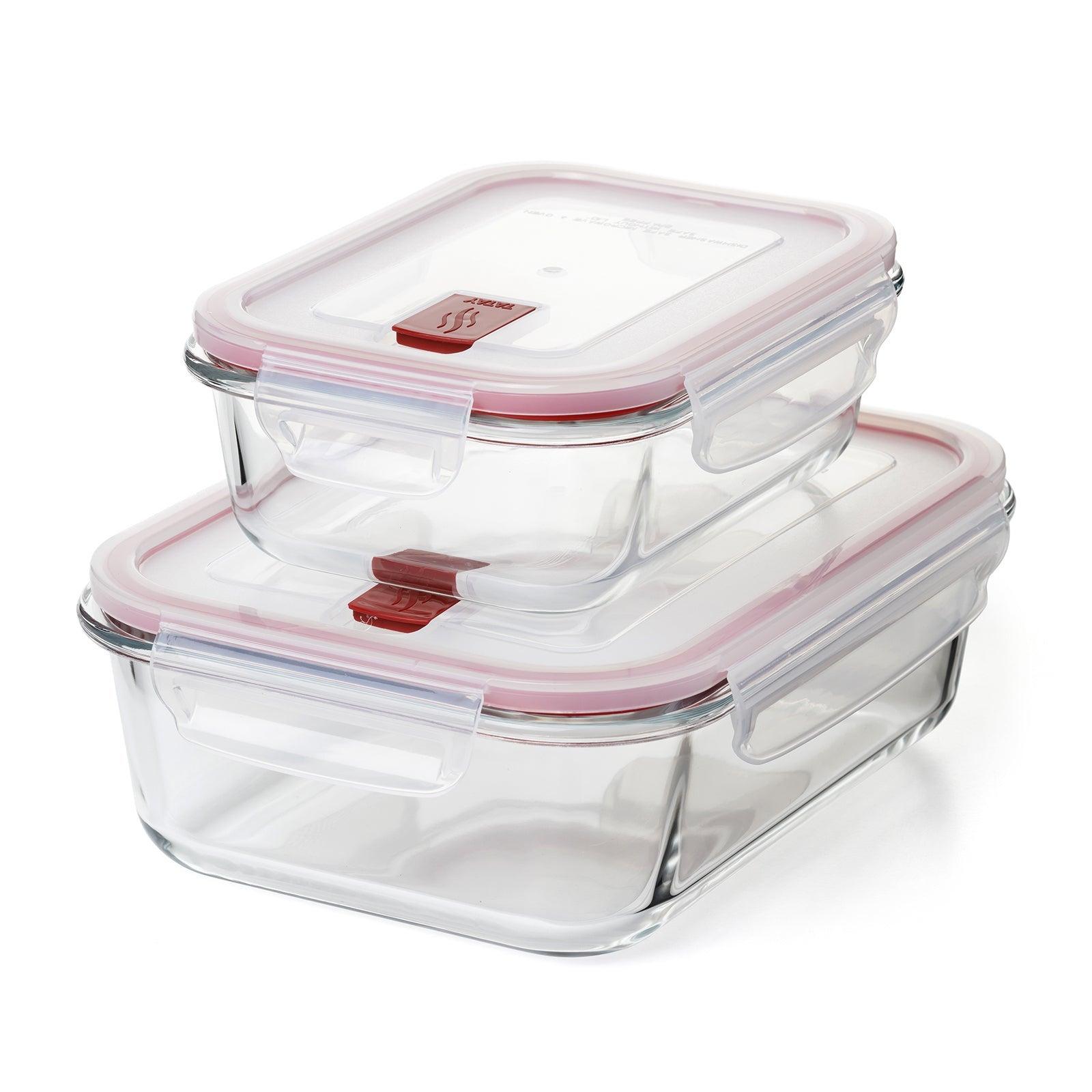
A glass food storage set may also include a plastic lid, silicone sealing ring, printed decoration, coating, adhesive or other components. Depending on their composition, intended use and contact conditions, these components may require their own compliance assessment.
In the United States, the FDA explains that the regulatory status of a food-contact article depends on the status of the individual substances that may migrate into food and the applicable authorizations and conditions of use.
In the EU, food-contact materials must meet the general requirements of Regulation (EC) No 1935/2004 and applicable good manufacturing practice requirements. Additional rules may apply to specific material categories.
This means a report covering the glass body alone should not automatically be treated as proof that the entire assembled product complies with every relevant requirement.
A more effective supplier checklist includes:
Glass material specifications and relevant test reports. Lid and sealing-material identification. Applicable food-contact compliance statements for each relevant component. Testing appropriate to the product's intended use and market. Traceability between the tested samples and the products actually being manufactured.
The objective is not to test every component unnecessarily. It is to identify which evidence is needed for the actual product configuration.
Reference: FDA guidance on determining the regulatory status of food-contact material components.
3. Why a Supplier's Certificate May Not Be Enough
Buyers sometimes receive a collection of certificate logos, declarations and laboratory reports but still lack the information needed to assess a shipment.
The problem is often not the absence of paperwork. It is the lack of a clear connection between the documents and the specific product being purchased.
For example, a test report may cover a different lid material, an earlier product design or a sample that does not match the current production specification.
To improve verification, procurement teams should request:
Product identification: The exact model, material and configuration covered by each document. Test scope: The substances or performance characteristics evaluated and the test methods used. Laboratory information: The issuing laboratory, report number and date. Intended-use conditions: Relevant information about food types, temperature and duration of contact. Change management: Confirmation of how material, supplier or design changes are reviewed.
For EU-bound products, buyers should also confirm which declarations and tests are legally applicable to the materials concerned. Not every material category follows the same detailed EU rules.
A well-organized compliance file makes it easier to review products, answer retailer questions and investigate quality issues.
4. Thermal Shock Resistance Must Match Real-World Use
Another recurring concern is the gap between a product's advertised heat resistance and its actual intended use.
Borosilicate glass is valued for its relatively low coefficient of thermal expansion and its ability to withstand temperature changes better than many conventional glass formulations. However, this does not mean every glass container is immune to thermal shock or breakage.
Performance depends on the glass composition, wall thickness, geometry, manufacturing quality, temperature difference and conditions of use.
Importers should distinguish between a stated maximum service temperature and evidence of thermal-shock performance under defined test conditions.
Before approving a product, ask the supplier:
What test method and acceptance criteria were used? Does the test represent the intended use of the product? Are there restrictions on sudden temperature changes? Is the product suitable for oven, microwave, freezer or dishwasher use, and under what conditions? Are lids and seals subject to different temperature restrictions?
Product instructions should clearly distinguish the capabilities of the glass body from those of the lid and sealing components.
This reduces the risk of misleading product descriptions, consumer misuse and avoidable returns.
5. Prevent Quality Problems Before Mass Production
A product may pass initial testing and still develop problems when production moves to a larger scale.
Common issues include dimensional variation, inconsistent sealing, lid fit problems, glass defects, packaging damage and changes in materials or suppliers.
The most effective response is to establish quality checkpoints before production rather than relying entirely on inspection after manufacturing.
A practical quality-control plan can include:
Before production
Confirm the approved sample and technical specification. Freeze the agreed materials, dimensions, lid design and packaging. Define acceptance criteria for appearance, fit and function. Agree on inspection and testing responsibilities.
During production
Monitor critical dimensions and sealing performance. Check for visible glass defects and assembly inconsistencies. Verify that production materials match the approved specification. Record and investigate recurring defects.
Before shipment
Inspect finished goods against the agreed criteria. Verify packaging protection and carton markings. Review relevant test reports and compliance documents. Retain traceable records of the production batch and inspection results.
For products sold under a private label, this process is especially important because the brand owner may bear substantial commercial and reputational costs when a product fails in the market.
6. Packaging Design Is Also a Procurement Decision
Regulatory compliance is only one part of packaging performance. Importers must also balance product protection, freight efficiency, retail presentation and sustainability goals.
Glass containers can be damaged during transport if the packaging does not adequately control movement, vibration and impact. At the same time, unnecessarily large cartons increase shipping volume and material consumption.
A good packaging review should examine:
Individual product protection and separation. Inner packaging and master-carton strength. Palletization and container-loading efficiency. Retail presentation and labeling requirements. Packaging material specifications and relevant environmental obligations. Packaging performance under realistic transport conditions.
Any reduction in packaging material should be validated against the risk of breakage and the actual distribution route.
The goal is not simply to use less packaging. It is to achieve an appropriate balance between protection, logistics cost, customer experience and applicable environmental requirements.
7. How to Choose a Glass Container OEM Partner in 2026
When evaluating an OEM or private-label supplier, price remains important, but it should not be the only purchasing criterion.
A supplier's ability to maintain consistent specifications, provide relevant technical documents, manage component changes and support corrective actions can significantly influence the total cost of ownership.
Before placing a large order, buyers should evaluate five areas:
Material and product capability: Can the supplier clearly identify the glass, lid, seal and other relevant components?
Compliance support: Can the supplier provide accurate, product-specific documentation for the destination market?
Quality management: Are inspection procedures, acceptance criteria and batch traceability clearly defined?
Packaging and logistics: Has the packaging been designed and validated for the intended transport conditions?
Communication and corrective action: Can the supplier respond promptly when testing, inspection or customer feedback identifies a problem?
The right partner should help identify risks early, not merely provide documents after a buyer requests them.
How GraceBoro Supports Global Buyers
GraceBoro supplies borosilicate glass food containers, baking dishes and customized kitchenware solutions for international brands, retailers, distributors and importers.
Our OEM/ODM services support product customization, private-label branding, packaging development and coordination of relevant compliance documentation according to project requirements.
For buyers preparing new products or reviewing existing supply chains, we recommend starting with three essentials:
Confirm the product configuration and destination-market requirements. Review the available test reports and supporting documents against the exact specification. Establish quality-control and packaging requirements before mass production.
This approach helps buyers make more informed sourcing decisions and reduce avoidable surprises before shipment.
Planning a new glass food container project?
Contact GraceBoro to discuss your product specifications, target market, packaging requirements and OEM/ODM sourcing needs.
Website: https://www.graceboro.com/
Email: sale@graceboro.com
GraceBoro — Your Global Sourcing, Manufacturing & Innovation Partner.